Top 5 Ways to Discipline a Child
Feb 19, 2026
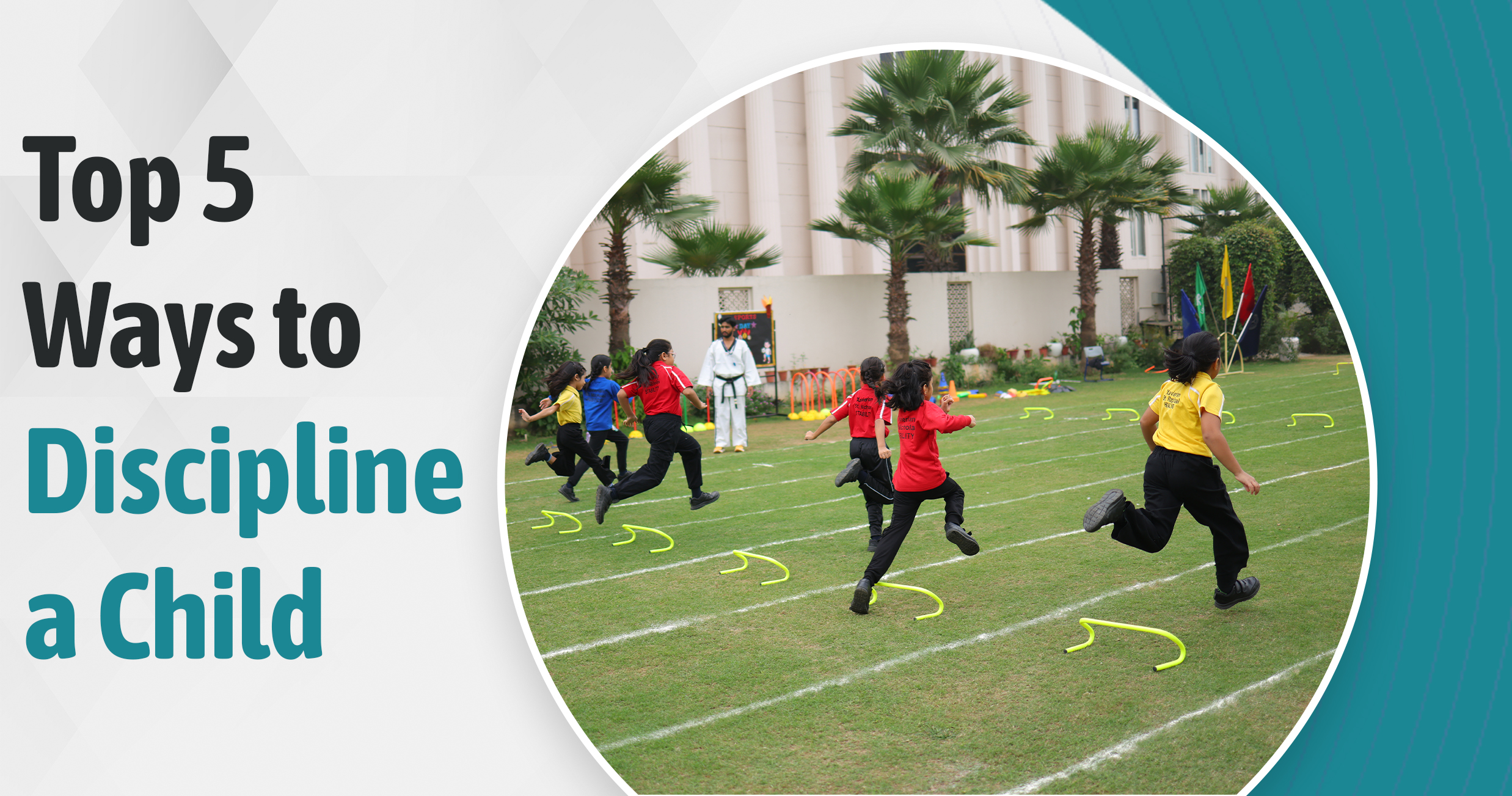
Nursery admission in Gurgaon has increased by 28% in the last two years, based on reports from the Ministry of Education. Parents want places where children learn self-control early as discipline plays a big role in this growth. This article is based on many years of watching children in busy schools. It shares five simple and practical ways to guide children. These methods focus on daily habits, not strict punishment and they help children get ready for structured places like good CBSE schools in Gurgaon.
What Makes Positive Reinforcement Work in Children?
Positive reinforcement works when parents notice good behaviour and they respond quickly. For example, when a child puts toys away in the toy-box, a small “thank you” makes them feel proud. Over time, children connect good behaviour with good feelings.
In nursery schools like St Xaviers High School, Sector 81, Gurgaon, teachers often use stickers or stars for completed tasks. This helps children cooperate better and helps them feel motivated and proud of their achievements.
If a four-year-old shares food, praise the action clearly:
"You shared your biscuit, so everyone was happy."
This makes the child want to repeat the behaviour. Studies show this method reduces tantrums in group settings.
Simple ways to use it:
- Give rewards for small wins, like finishing homework early
- Use kind words instead of gifts
- Track progress on a simple chart at home
This method feels natural and helps children grow confidence quietly.
How Do Clear Boundaries Help Children?
Boundaries give children a sense of safety. Rules should be simple, like bedtime at 8 pm or no screens after dinner. The key is to follow the rules every day.
We have a real instance where a family used a “yes or no” chart for requests. Doing so, the children learned limits and argued less. Research shows clear rules can reduce anxiety in young children.
Helpful tips:
- Talk about rules during family meals
- Explain rules in simple words
- Use timers to help with transitions
- Change rules slowly as children grow
Clear structure helps children focus, just like in the best schools in Gurgaon.
Why Are Natural Consequences Better Than Lectures?
Natural consequences help children learn from their actions.
- Spill milk? The child cleans it up.
- Toys left scattered after an activity? The next activity only begins after tidying it up.
This teaches responsibility without long talks.
Parents see faster results with this method. For example, a child who was late once learned to get ready faster the next day. Studies show fewer repeated mistakes this way.
How to use it well:
- Step in only if safety is a concern
- Stay calm and avoid anger
- Talk later: “What happened? What can we do next time?”
How Does Modelling Behaviour Help Discipline a Child?
Children learn by copying adults. When parents stay calm and pause before reacting, children learn to do the same. Less shouting leads to a calmer home.
We have a parent (mother) who usually stays calm during arguments with the child. Soon, her child copied her behaviour. Research shows children learn more from actions than words.
Good examples to set:
- Stay polite during traffic or family stress
- Say sorry when you make a mistake
- Choose positive books and friends
This helps children behave well in groups, which matters during pre nursery admission in Gurgaon.
Quick Comparison: Discipline Methods
The schools in sector 81 Gurgaon bring for you a quick comparison guide for easy understanding.
| Method |
Best For |
When You See Results |
Why It Works |
Watch Out For |
| Positive Reinforcement |
Building motivation |
1–2 weeks |
Encourages good behaviour through praise and rewards |
Needs daily attention and follow-up |
| Clear Boundaries |
Creating routine |
Immediate |
Gives children structure and a sense of safety |
Rules must be followed every day |
| Natural Consequences |
Teaching responsibility |
After a few times |
Children learn directly from their actions |
Not suitable for unsafe situations |
| Modelling Behaviour |
Long-term habits |
Around one month |
Children copy adult behaviour |
Adults must stay consistent |
| Time-Outs |
Calming strong emotions |
Immediate |
Gives space to cool down and reset |
Should be short and not overused |
When Should You Use Time-Outs?
Time-outs help children calm down when emotions are high. Choose a quiet, boring place in your home. Keep it short like, one minute per year of age. No talking during the time-out.
Used correctly, time-outs reduce aggression. Studies show good results when they are not overused.
Tips:
- Explain time-outs before using them
- Say: “This helps you calm down”
- Hug and reconnect after
Final Thoughts
All these discipline methods work best when used together. Parents can adjust them to fit their daily routine and the temperament of the child. With time and patience, children learn calm and balanced behaviour. If you want your child to grow and study in an environment where effective disciplinary methods are used, St. Xavier's High School, Sector 81, Gurgaon is the place to be.