Early Childhood Education: Key to Child Development
Apr 27, 2026
Learn why early childhood education plays a key role in child development. Build strong foundations for learning, behavior, and lifelong success.
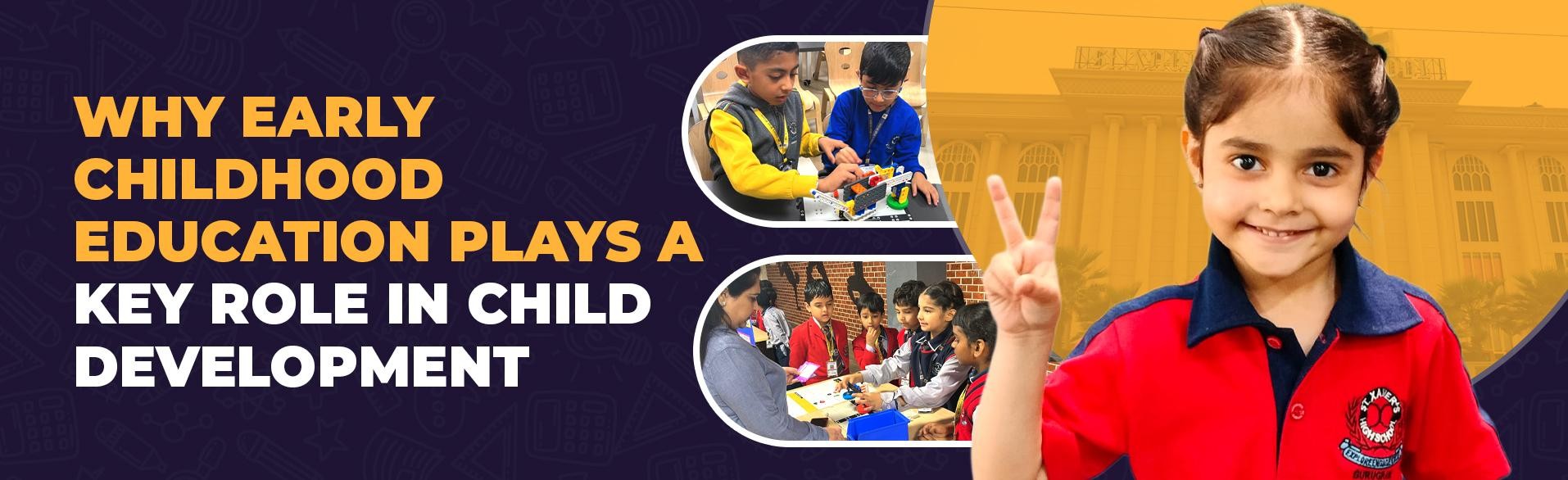
Nobody really warns parents about the three-year window. That is the actual problem. Early childhood education is not something that officially starts when a child walks into Grade I wearing an oversized backpack that bangs against their knees. It starts earlier. Significantly earlier.
The exact years most families spend debating whether a structured learning environment is truly necessary yet are precisely the years a developing brain is working the hardest.
Between birth and age six, the human brain builds neural connections at a frantic speed it will never, ever repeat again. Language instincts, emotional regulation, social reasoning, and basic problem-solving patterns all crystallize during this exact period. Not later. Right now.
Understanding the Real Importance of Early Childhood Education
The importance of early childhood education does not show up in a colorful nursery classroom. It shows up in a Grade II literacy lesson three years later. It shows up when one child calmly asks a clarifying question without any embarrassment, while another child stares quietly at the board, entirely convinced they simply cannot read.
That massive gap did not start in Grade II. It started at age three. A child who spent two structured early years in a quality learning environment arrives at formal school already carrying something their peers are frantically trying to build from scratch.
They have the ability to follow multi-step instructions. They have the instinct to try again after getting something wrong. They possess the basic social vocabulary needed to work alongside another tiny human being without completely dissolving into tears over a shared box of crayons.
These are not academic skills. They are foundational human operating systems. And they are built between ages two and six.
The Benefits of Early Childhood Education That Follow a Child for Years
The benefits of early childhood education do not peak at age five and then gently fade into the background. They compound. Every structured early experience builds a solid foundation that the next academic year draws from. Usually, nobody even realizes where the advantage actually originated.
Here is a reality most school tours will never show.
Imagine two children enrolled in Grade I at the exact same campus. Equally loving families. Equally engaged parents. The only material difference is that one child completed two years in a structured early childhood program before enrollment, and the other did not.
By mid-term, the contrast becomes incredibly visible in completely ordinary moments.
- During group activities, the first child waits her turn without being reminded by the teacher every single time.
- She corrects her own phonics errors, pauses, and continues reading without requiring constant adult reassurance.
- The second child is not dramatically behind. But he needs individual redirection for basic classroom routines she had already completely internalized long before Grade I began.
- Peer disagreements occasionally escalate into shouting for him because the emotional vocabulary to navigate a simple conflict simply is not there yet.
By year-end, the gap widens. Not because one child is magically more intelligent. Simply because one child had a two-year head start in developing the internal structures that formal schooling assumes already exist.
What Actually Happens Inside a Strong Early Childhood Program
Most parents picture an early childhood program as supervised coloring and scheduled snack time. They picture structured play with a slightly more organized timetable. That harmless assumption is exactly why so many families deeply underestimate what they are actually choosing between.
A child stacking wooden blocks with a classmate at age four is simultaneously developing spatial reasoning, turn-taking behavior, and basic negotiation instincts. None of it feels like learning to the child. All of it is.
A child listening to a story read aloud by a trained early-years educator is actively building listening comprehension, narrative sequencing, and deep empathy. In the exact same twenty minutes. Without a single formal worksheet ever being handed out.
The deliberate design behind these activities is what separates a genuine early childhood program from an expensive indoor waiting room. Trained educators observe carefully before they correct. They build emotional vocabulary intentionally. They structure transitions so children develop an internal sense of routine instead of just blindly reacting to external adult commands.
The right program never looks like a miniaturized, rigid formal classroom. It looks like purposeful, joyful activity guided by adults who understand exactly what each small interaction is constructing inside a developing brain.
What Adults Often Get Wrong About Starting Early
The most common mistake is not rushing children into intense academics too soon. It is actually the exact opposite. Parents who genuinely want to protect their child from early pressure sometimes delay structured learning entirely. They assume unstructured home time is the gentler, kinder alternative.
It is a deeply caring instinct. But in purely developmental terms, it costs more than most families realize until the social gap becomes glaringly visible in Grade II or Grade III.
Genuine early childhood education is not pressure. It is not heavy homework for four-year-olds dressed up in bright classroom furniture. It is the deliberate creation of conditions in which a developing brain can do what it is already biologically primed to do faster, more confidently, and with vastly better long-term retention.
Nobody talks about this reality clearly enough. Which is exactly why so many families make the decision a year too late and spend the years afterward quietly trying to compensate for it.
Building the Right Foundation from the Very Beginning
At St. Xavier's High School, Sector 81, educators do not wait for Grade I to start investing in a child's development. The campus is fundamentally designed for the early years, with a highly supportive student-teacher ratio, inquiry-based learning, and a nurturing community where no young child is ever left to figure things out entirely on their own.
Book a campus visit today and speak directly with the early years team. Come and see exactly how a holistic foundation is laid, making every subsequent stage of learning a joyous and natural progression.